Republicans Built Bennie Thompson’s “Super-Democratic” District. Now They Want to Burn It Down.
How Mississippi already mastered the gerrymander everyone’s suddenly talking about.
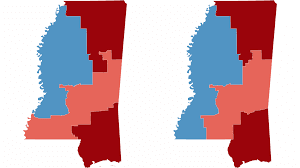
The country is having a loud new argument about gerrymandering. The Supreme Court reshaped voting-rights law this spring, Louisiana lost a majority-Black district, and politicians from Washington to Baton Rouge are treating racial redistricting like some shocking frontier being crossed for the first time.
In Mississippi, the reaction is drier.
“Being it the country now gets to know what it’s like living in the state of Mississippi,” says Rep. Robert Johnson, the Democratic leader in the state House, from Natchez. “This old gerrymandering thing that everybody’s excited about, what they’re gonna do in Louisiana? We’ve already done it. We just call it Tuesday.”
It’s a good line because it’s true, and because it cuts against the story both parties prefer to tell. To understand why, you have to start with a fact that flips the usual assumption on its head.
The one Black district was never a gift. It was a remedy.
The instinct is to look at Mississippi’s 2nd Congressional District, the majority-Black seat that runs through the Delta and has elected Bennie Thompson since 1993, and assume it was drawn to hand Democrats a safe seat. The history says the opposite.
The Delta, home to the largest Black population in the state, was a single congressional district from 1882 all the way through the maps of 1932, 1952, and 1962. Then in 1966, immediately after the Voting Rights Act passed, the Legislature deliberately split the Delta across three districts at once, producing a white voting-age majority in all five of Mississippi’s districts. That was the original gerrymander, and it ran the other direction from what most people assume. The goal was to crack Black voters apart so they could not elect anyone.
That split held for nearly twenty years. It was undone only by lawsuit. In Jordan v. Winter (1984), following a Justice Department objection under the Voting Rights Act, a federal court ruled that fracturing the Black population diluted its voting strength illegally and ordered a new map with one Black-majority district. In 1986 Mike Espy won it, becoming the first Black congressman from Mississippi since Reconstruction. Thompson followed him.
So when Mississippi officials describe the 2nd as a district “drawn to protect Bennie Thompson,” they are telling the end of the story and skipping the beginning. It was drawn to remedy nearly a century of vote dilution, by federal courts, because the state would not do it on its own.
Here’s the part the outrage leaves out.
Johnson’s deeper point is that Republicans don’t actually mind the packed Black district. They have quietly relied on it.
“This is some capital-H hypocrisy, some of this outcry about Bennie’s super-Democratic district,” Johnson says. “It’s that way because Republicans wanted it. To protect all the other seats.”
The math explains the move. Mississippi is about 40 percent Black, the highest share of any state, and that vote is overwhelmingly Democratic. Concentrate as much of it as possible into one district and you get a single overwhelmingly Democratic seat, and three comfortably Republican ones. Spread it out, and you risk creating two competitive districts instead of one safe Democratic one. Johnson is blunt about the consequence: if cracking the 2nd actually helped Republicans, they would already have done it.
“If there was any chance of getting rid of a Democratic congressional seat, we’d be doing it, trust me,” he says, describing the Republican calculation. “You couldn’t do that without ending up with at least two competitive districts.”
He points back to the 2022 redistricting fight, when he says House Democrats wanted to anchor the 2nd in the Delta and add all of Hinds and Madison counties, and Republicans, including Republican congressional candidates, declined. The packed map served the majority. Until, suddenly, a new legal weapon made unpacking it look attractive.
The weapon is Callais.
On April 29, 2026, the Supreme Court decided Louisiana v. Callais 6-3, striking down Louisiana’s second majority-Black district as an unconstitutional racial gerrymander. The Court did not formally erase Section 2 of the Voting Rights Act, the provision that bars vote dilution. But it heightened what plaintiffs must prove, pushing back toward a requirement of intentional discrimination rather than the “results” test Congress deliberately wrote into the law in 1982. In dissent, Justice Kagan warned the ruling leaves Section 2 “all but a dead letter.”
That doctrinal shift matters more than it sounds. Congress restored the results test in 1982 precisely because an earlier decision, Mobile v. Bolden, had demanded proof of intent, a bar so high it was nearly impossible to clear. Callais swings the law back toward that bar. And it gave Mississippi Republicans the opening they had not previously had a reason to use.
The reaction was immediate. State Auditor Shad White, eyeing a 2027 run for governor, posted that Mississippi “might no longer have a district drawn to protect Bennie Thompson.” A state senator said it was time to “erase” the district. Gov. Tate Reeves declared Thompson’s “reign of terror on MS-2 is over.” The president has pushed Mississippi to redraw its maps as part of a national effort to flip Democratic seats.
The irony Johnson is pointing at sits right there in the open.
Mississippi is the Blackest state in the country, 38 percent by population. It has four House seats. One is held by a Black representative. Both of its U.S. senators are white Republicans. The move now on the table is to eliminate that one district, in that state, by spreading its Black voters thin enough across white-majority districts that they cannot decide an outcome anywhere.
What has stayed constant across sixty years, from the 1966 split to Jordan v. Winter to the post-Callais scramble, is not the law. The law has lurched back and forth. What has stayed constant is the instinct of the state’s leadership about how Black voting strength should be arranged. Only the tools have changed.
“We just call it Tuesday,” Johnson says.
A special session on the maps has not been formally scheduled. But in Mississippi, the people who draw the lines have rarely waited long once the courts handed them a reason.